The Perinatal Pelvic Health Services (PPHS)
Our Perinatal Pelvic Health Service supports women during pregnancy and up to 12 months after birth with pelvic health concerns. This includes problems with bladder or bowel control, pelvic pain, prolapse symptoms, and recovery following birth-related injuries.
Pelvic health symptoms can affect anyone during, or after pregnancy. Around 1 out of 3 women will experience a problem with their pelvic floor muscles at some point during their life. Our specialist team includes specialist midwives, physiotherapists and other healthcare professionals, who work together to provide assessment, treatment, and advice tailored to your needs.
Meet the Team
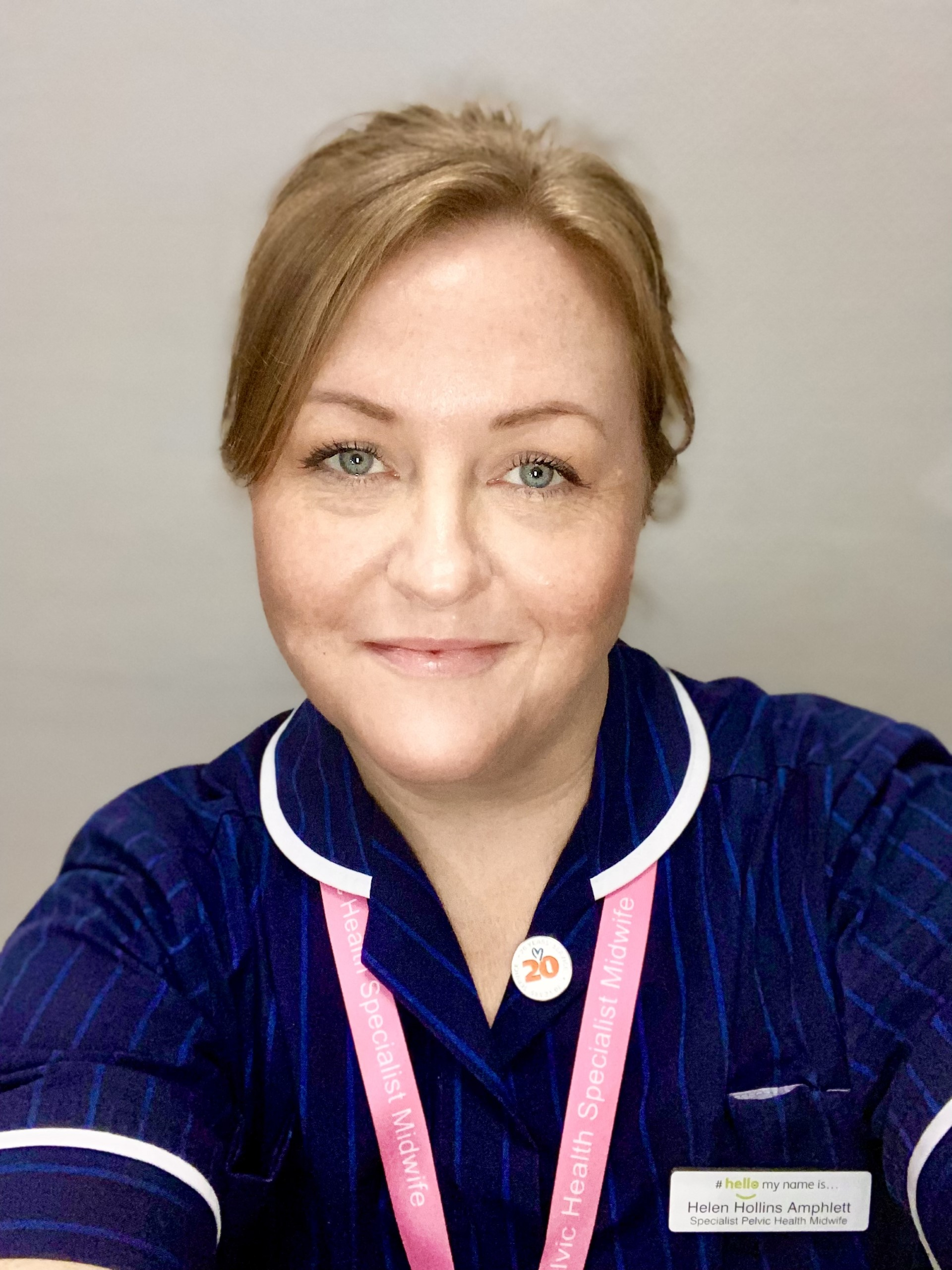
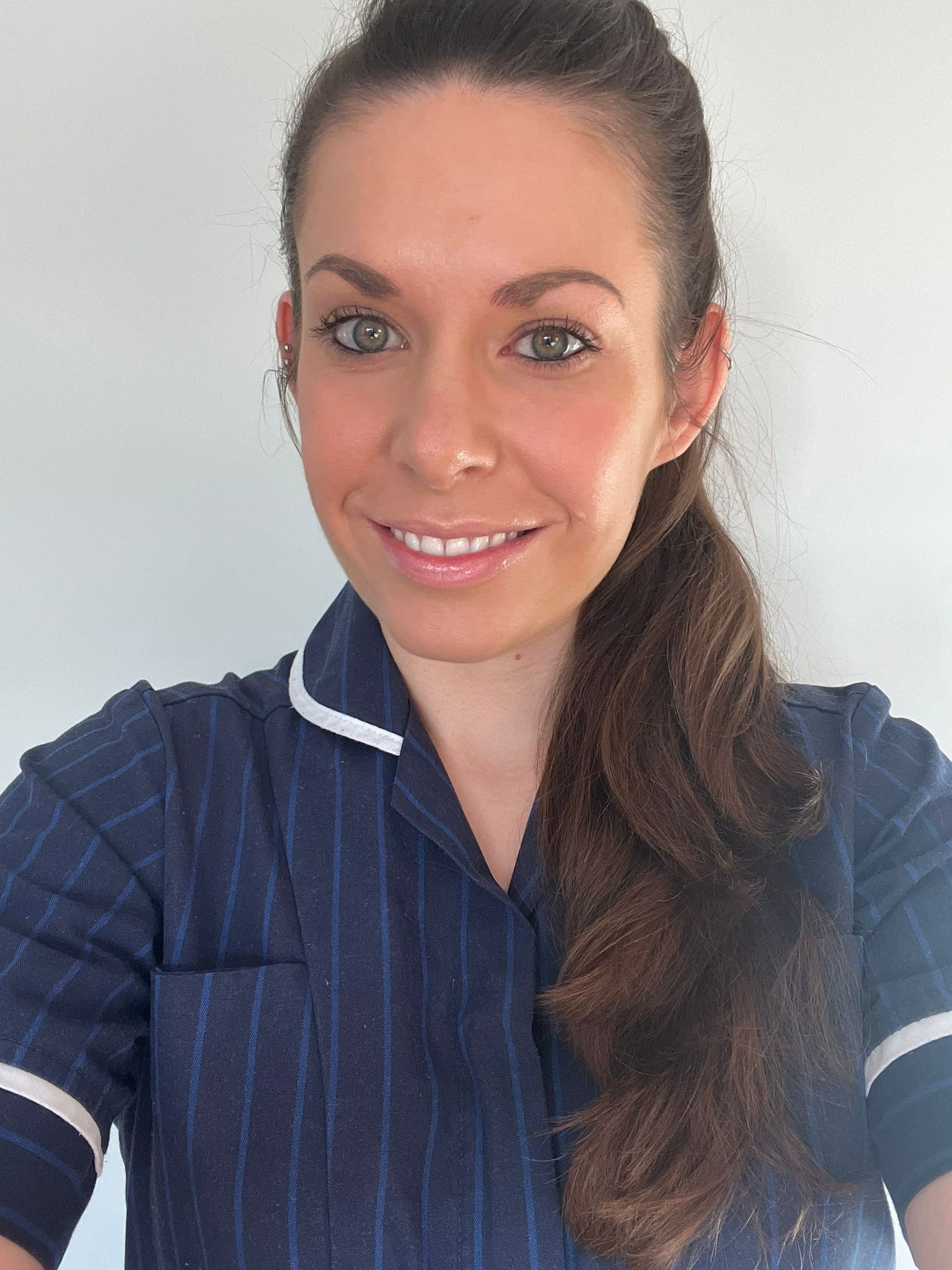
Helen Hollins Amphlett Katy Edwards Chloe Gill
Specialist Perineal & Pelvic Specialist Perineal & Pelvic Perinatal & Pelvic Health
Health Midwife Lead Health Midwife Service Midwife
How can I access the service?
You can be referred to this service by a healthcare professional, such as your midwife, GP, or obstetrician, if you are experiencing symptoms or require follow-up care.
Some clinics are offered routinely to women following certain birth experiences, even if you do not currently have symptoms.
Our clinics
We offer a range of clinics to support both the prevention and treatment of pelvic health symptoms during pregnancy and after birth.
PPHS clinic
This specialist clinic supports women experiencing pelvic health symptoms during pregnancy and after birth. Referrals are made by healthcare professionals for concerns such as bladder or bowel issues, pelvic pain, or pelvic organ prolapse. Our team provides a full assessment, and creates personalised treatment plans to help manage symptoms, improve quality of life, and support recovery during the perinatal period. Treatment may include pelvic floor rehabilitation, lifestyle guidance and ongoing support to help manage and improve your symptoms.
Your Community Midwife will undertake a pelvic health risk assessment at your booking appointment and again at around 31 weeks pregnant. This assessment will also be completed prior to discharge by the Community Midwives in the postnatal period.
Following this assessment, your Community Midwife may offer you a referral to the Perinatal Pelvic Health Service.
Common pelvic health issues can be found in the table below:
| Antenatal | Postnatal |
|
Bladder issues (incontinence, urgency) Bowel leaking Flatus incontinence Pelvic organ prolapse Previous complex perineal trauma Persistent perineal pain Pelvic girdle pain Diastasis recti |
Bladder issues Bowel leaking Dyspareunia Pelvic organ prolapse Pelvic floor dysfunction Perineal wound concerns
|
OASI clinic
This clinic is for women who have experienced an obstetric anal sphincter injury (OASI) (third and fourth degree tears) during childbirth. See also care of your perineum and pelvic floor section below.
We provide routine follow-up to assess healing, bowel function, and pelvic floor strength. The team offers education, rehabilitation, and support to help reduce symptoms, improve confidence, and guide future birth planning where appropriate.
This clinic involves two appointments. During the second appointment, an endoanal ultrasound scan will be offered to assess the extent of the injury and to help guide future care and birth planning.
You do not need a referral for this clinic, as eligible women are automatically invited.
Pelvic Floor Clinic
The Pelvic Floor Clinic is run by Specialist Pelvic Health Midwives who provide support and guidance during the first few months after having your baby.
You will be invited to this clinic if you experienced:
- an instrumental birth (forceps or a ventouse birth)
- shoulder dystocia (where the baby’s shoulder gets stuck during birth)
- a longer second stage (over 3 hours) during the birth of your baby
Even if you do not currently have symptoms, this clinic provides specialist guidance on pelvic floor recovery, screening for any underlying issues, and advice on exercises and lifestyle measures to promote long-term pelvic health and prevent future problems.
Appointments are made automatically, and clinics contact details can be found at the bottom of this webpage.
Perineal Wound Clinic
The perineal wound clinic provides specialist care for women with perineal wounds following childbirth, including wounds that are slow to heal, infected or causing discomfort. We offer thorough assessment, wound management, pain relief strategies, and tailored advice to support healing and recovery. Our aim is to promote comfort, prevent complications, and help you return to normal daily activities as soon as possible.
You can either be referred by a healthcare professional or self-refer with any perineal wound concerns.
What you can expect from our service
You can expect an inclusive, compassionate, and experienced team approach. We provide a safe place to talk openly and share experiences. Our team will signpost guide you to the most appropriate health professional for assessment, prevention and treatment of the pelvic health concerns which may include specialist physiotherapists. We also provide education and advice on common pregnancy and postnatal pelvic health concerns, including pelvic floor muscle exercises and recovery after birth..
The PPHS service aim to identify and contact anyone meeting our service criteria soon after birth. If you feel you meet the criteria but have not been contacted, you can self-refer by e-mailing our Pelvic health e-mail: pelvichealthmidwives
What is the Pelvic Floor?
The pelvic floor is a group of muscles that:
- support the bladder, womb, vagina and bowel
- help control wind and bowel movements
- help the bladder work normally
- play a role in sexual function
These muscles stretch during childbirth to allow your baby to be born and sometimes need extra support to recover afterwards.
You are very welcome to bring your baby and/or a support person with you, however the appointment is just about your pelvic health and does not include any baby checks.
What the clinic aims to do:
- Check for pelvic floor muscle weakness and appropriately manage it, leading to a reduction in longer term bowel problems and pelvic floor dysfunction
- Teach effective pelvic floor muscle exercises and provide you with a personalised plan for how many to do and how often to do them
- Give you dietary advice about the best things to eat to support a healthier pelvic floor
- Help with planning for future pregnancies
- Teach you how to keep your pelvic floor healthy long term
What will happen at the appointments?
You will usually be offered two appointments; with the first taking place around six weeks after your baby was born and the second about twelve weeks after.
Your six week appointment will involve:
- A discussion about your birth and recovery
- Questions about bladder or bowel control and any symptoms you wish to tell us about
- If you agree, a gentle vaginal examination to assess how strong your pelvic floor muscles are strength and guide you how to do effective pelvic floor muscle exercises.
- Advice on diet and hydration to support your pelvic floor recovery
-
At your twelve week appointment we will:
- Discuss your wellbeing since the last appointment and check for any changes in your symptoms or pelvic floor function
- If you agree, a gentle vaginal examination to reassess muscle strength after completing six weeks of pelvic floor muscle exercises
- Offer an anal manometry assessment
- Determine an ongoing plan for maintaining a healthy pelvic floor following childbirth.
What is anal manometry?
-
Anal manometry is a test that measures how strong your back passage muscles are and how well they are working. These muscles make up part of your pelvic floor and help control wind and bowel movements. The test helps us check how well your muscles have recovered, identify any weaknesses and allow us to give you individualised advice.
No preparation is required, and you can eat and drink normally beforehand.
The procedure involves lying on your left side while a thin lubricated probe is gently placed inside your back passage. The probe measures muscle strength while you: relax, squeeze, cough and bear down gently. Most women describe the test as a slightly uncomfortable/ strange sensation but not painful.
After the test, there are no lasting effects, and you can continue with your day as planned.
If you would like further information or need to change/cancel your appointment, please contact the Pelvic Health Midwives. Details at the bottom of this page.
What is the perineum?
The perineum is the area between the opening of your vagina and your back passage (anus).
During a vaginal birth, the perineum stretches as your baby is born. This can sometimes cause a graze or a tear.
Up to 9 out of 10 women and birthing people who have a vaginal birth experience some sort of graze or tear. Your midwife will discuss with you if stitches are advised.
Tears can occur in:
- the perineum
- the vagina
- the labia
- the muscles around the anus
What are the types of perineal tears?
Tears are graded according to their severity:
First degree tear - small tear affecting the skin only
Second degree tear - deeper tear involving the muscles of the perineum.
Third degree tear – a tear involving the muscles around the anus (the anal sphincter)
Fourth degree tear - a tear extending into the rectum (back passage).
Third and fourth degree tears are known as Obstetric Anal Sphincter Injuries (OASI) About 3 in 100 women giving birth vaginally will experience an OASI
Visit this page to view diagrams of different types of tear Perineal tears during childbirth | RCOG
Who is more likely to experience an OASI?
It is not possible to predict when an OASI will occur. However, it may be more likely if:
- it is your first vaginal birth
- you are of South Asian origin
- your second stage of labour (from full dilatation to birth) is longer than 4 hours
- forceps or ventouse are used to help the birth of your baby
- your baby’s shoulders becomes stuck during birth (shoulder dystocia)
- your baby weighs more than 4kg
- you have had a previous OASI
What are the possible long term effects of OASI?
Most women who experience an OASI heal completely.
However, a small number of women may have difficulty controlling their bowels or passing of wind. This is why we have an OASI clinic to ensure appropriate care and support to be provided.
What is the OASI Care Bundle
The Royal College of Obstetrician and Gynaecologist (RCOG) developed the OASI Care Bundle to help reduce the risk of severe tears during childbirth.
The care bundle includes four actions based on clinical evidence:
- Antenatal Discussion - your midwife or obstetrician will discuss the care bundle with you during pregnancy and may recommend perineal massage
- Supporting the perineum during birth - as your baby’s head is born, the midwife or obstetrician will support the perineum and help control the speed of birth.
- Appropriate use of episiotomy - a controlled cut made to help birth your baby
- Careful examination after birth - After the birth, your perineum and rectum will be examined to check for any tears.
Your Midwife or Obstetrician will always discuss your care with you. If you feel uncomfortable with any part of the care during labour please tell them.
Is there anything I can do to reduce the risk of having an OASI?
Some things may help reduce the risk of severity of tearing.
During pregnancy - perineal massage from 35 weeks of pregnancy may reduce the risk of tearing. The link below demonstrates how to do perineal massage:
www.
During labour – certain birthing positions may help reduce the severity of tearing including:
- kneeling
- all fours
- lying on your side
Your midwife may also:
- apply a warm compress (pad, swab or gauze) on the perineum as the baby’s head stretches the perineal tissues.
- use a hands on technique to support your perineum during birth
If you do experience a tear during childbirth see our information about Perineal trauma and care following childbirth
What is the perineum?
The perineum is the area between the opening of your vagina and your back passage (anus).
During a vaginal birth, the perineum stretches as your baby is born. This can sometimes cause a graze or a tear.
Up to 9 out of 10 women and birthing people who have a vaginal birth experience some sort of graze or tear. Your midwife will discuss with you if stitches are advised.
Tears can occur in:
- the perineum
- the vagina
- the labia
- the muscles around the anus
What are the types of perineal tears?
Tears are graded according to their severity:
First degree tear - small tear affecting the skin only
Second degree tear - deeper tear involving the muscles of the perineum.
Third degree tear – a tear involving the muscles around the anus (the anal sphincter)
Fourth degree tear - a tear extending into the rectum (back passage).
Third and fourth degree tears are known as Obstetric Anal Sphincter Injuries (OASI) About 3 in 100 women giving birth vaginally will experience an OASI
Visit this page to view diagrams of different types of tear Perineal tears during childbirth | RCOG
See also leaflet from RCOG for Third- and fourth-degree tears (OASI) | RCOG
How can I care for my perineum and stitches after birth?
Your vagina and perineum may feel sore, swollen or bruised after a vaginal birth.
The following advice can help reduce discomfort and support healing. If you have any concerns about healing, please speak to your midwife.
Hygiene:
Good hygiene can help prevent infection.
- Wash your hands before and after you go to the toilet and before and after changing sanitary pads.
- Use only one sanitary pad at a time and change them often (every 2-3 hours).
- Shower or wash once a day, avoiding any soaps or disinfectants that may irritate the area.
- Use a clean jug to pour warm water over your perineum when you pass urine as this can be very soothing. Pat it dry with a clean towel or flannel. Keep a separate towel for doing this and wash it regularly.
Rest and comfort:
Try to keep in comfortable positions such as lying on your:
- side, with a pillow between your knees
- back with your knees bent
- tummy if this is comfortable
A rubber ring is not recommended as it can delay healing.
Your community midwife will offer to check you r stitches each visit when you are recovering. Agreeing for them to check your wound, especially if you are unable to do it yourself can, helps to pick up any problems early on so that you can get help if you need it.
If you have a labial tear, aim to separate your labia a few times a day to avoid fusion.
Spending short periods without underwear or clothing on the lower half of your can allow the perineum to air dry and may provide some relief.
Diet, fluids and bowel care:
It can be a few days before you open your bowels after giving birth.
To help avoid constipation:
- Aim to drink 2-3 litres of water a day
- Eat plenty of fresh fruit, vegetables and wholegrain foods such as wholemeal bread and pasta to help avoid constipation.
- Try to relax and avoid straining when opening your bowels.
- Lean forward with your elbows on your knees while on the toilet.
- Placing your feet on a small stool can help
If you develop haemorrhoids (piles) speak to your midwife or doctor for advice.
Pelvic floor exercises:
The pelvic floor muscles support your bladder, bowel and uterus. Pregnancy and birth can weaken these muscles.
Pelvic floor exercises help:
- improve healing
- reduce swelling and bruising
- prevent bladder and bowel problems
How to do pelvic floor exercises:
- Tighten the muscles around your back passage, as if you are trying to stop yourself passing wind.
- At the same time tighten the muscles around your vagina, as if you are trying to stop yourself passing urine.
- Hold for up to 10 seconds before releasing. Repeat up to 10 times.
- Practice quick squeezes by tightening and relaxing the muscle straight away, up to 10 times.
- Try and do 3 sets a day.
Perineal Scar Massage:
If you had a tear or an episiotomy (cut) in the perineum (area between the vagina and back passage (anus)), the resulting scar tissue can sometimes become tight, sensitive, painful or raised which may cause some discomfort during daily activities or sexual intercourse.
What is scar tissue?
Scar tissue forms as your body repairs a tear or cut. Scar tissue can often be firm, uneven and less stretchy than normal tissue. Your body produces collagen fibres to repair a wound and it is the overlapping of these fibres that can create scar tissue.
How does perineal scar massage work?
Massage increases blood flow to the area being massaged and increases the temperature in the tissues. This can help scar tissue break down and become more stretchy.
This may reduce any pain or discomfort in the area, help the scar to become more flexible and soften and flatten it to improve its appearance.
You should wait until your wound and stitches have fully healed before you start perineal massage.
How do I do perineal scar massage?
Have a warm bath or use a warm compress before you begin and get into a comfortable lying or semi-sitting position.
Choose a natural lubricant or oil such as almond, olive, or coconut oil – as long as you are not allergic to them - to make the massage more comfortable
Massage should not be painful, but it may be uncomfortable at first. You can massage the scar tissue as shown below for 5-10 minutes (or less if it is still too sensitive) daily or every other day.
Start on the outside. Using the pad of your thumb or fingers (see below), apply gentle pressure and firmly massage in circles over the scar, across the scar (up and down) and along the line of the scar (side to side). Work over all parts of the external scar towards the anus.
When you feel ready you can begin to massage the inside your vagina. Put your thumb into the entrance of your vagina so the pad of your thumb is facing down towards your anus. Place your index finger over your perineum; you should be able to feel the scar beneath your finger, and massage by repeating the patterns above.
Finally, apply a firm pressure on the back of the vaginal opening with your thumbs and make firm “U” shapes (going from 4 to 8 o’clock if you imagine a clock face) over the scar area. This might feel a little bit tender to start with but if you are able to carry on, it will get better.

If it is painful, stop or slow down and build up gradually.
When do I need to seek advice?
Contact Maternity Triage on 01270 273116 who can refer you to the Specialist Pelvic Health and Perineal Midwives if you experience:
- Increasing pain in your stitches or perineum
- Stitches appear to be coming apart
- Your wound has an offensive or unpleasant smell
- Leakage of faeces or difficulty controlling wind
- Fever or high temperature
If you would like further information visit the following websites:
Royal College of Obstetricians and Gynaecologists (RCOG) Perineal tears and episiotomies in childbirth rcog.org.uk
The MASIC Foundation https://
Bladder and Bowel Foundation https://www.bladderandbowel.org/
Pelvic Obstetric and Gynaecological Physiotherapists (POGP) https://thepogp.co.uk/patient_information/default.aspx
Ask the Physio: Pelvic floor exercises (YouTube, Charterd Society of Physiotherapy)
Care of a third or foutrh degree tear that occured during childbirth (also known as obstetric anal sphincter injury OASI) (Royal College of Obstetricians & Gynaecologists)
Care of your perineum and pelvic floor (MCHFT)
CONfidence app: supporting people with bladder and bowel conditions (YouTube, Bristol Health Partners)
Exercise and advice after loss of your baby (Pelvic Obstetric & Gynaecological Physiotherapy)
Exercise and advice for those whose pregnancy has ended with adoption, fostering or surrogacy (Pelvic Obstetric & Gynaecological Physiotherapy)
Fecal incontinence (accidental bowel leakage) (IUGA, Your Pelvic Floor)
Fit for Pregnacy (Pelvic Obstetric & Gynaecological Physiotherapy)
Fit for the future, essential exercises and advice after childbirth (Pelvic Obstetric & Gynaecological Physiotherapy)
Your pelvic floor and how to do pelvic floor exercises (RCOG, MCHFT)
OASI Care Bundle Information for Expectant Mothers (RCOG)
Painful sex (dyspareunia) (IUGA, Your Pelvic Floor)
Pelvic floor exercises (Your Pelvic Floor)
Pelvic floor exercises during and after pregnancy (YouTube, MyHealthLondon)
Pelvic floor exercises for women (YouTube, Pelvic Obstetric & Gynaecological Physiotherapy)
Pelvic floor muscle exercises and advice for people who were assigned female at birth) (Pelvic Obstetric & Gynaecological Physiotherapy)
Pelvic floor muscle training (Pelvic Obstetric & Gynaecological Physiotherapy)
Pelvic floor muscle training (YouTube, North Bristol NHS Trust)
Pelvic girdle pain and pregnancy (Royal College of Obstetricians & Gynaecologists)
Pelvic health advice leaflets (Pelvic Obstetric & Gynaecological Physiotherapy)
Pelvic organ prolapse (IUGA, Your Pelvic Floor)
Perineal tears and episiotomies in childbirth (Royal College of Obstetricians & Gynaecologists)
Pregnancy related pelvic girdle pain and other common conditions in pregnancy (Pelvic Obstetric & Gynaecological Physiotherapy)
Reducing severe tears video (Vimeo, RCOG)
The Power of your Pelvic Floor (Appeal)
Third and fourth degree perineal tears (IUGA, Your Pelvic Floor)
Squeezy App (Squeezy)
Stress urinary incontinence (IUGA, Your Pelvic Floor)
Supporting women with injuries from childbirth (MASIC)
Your pelvic floor (YouTube, NHS Highland)