Health and care services come under even greater pressure during the colder months due to winter illnesses and difficulties in discharging patients from hospital. We have tried and tested plans to address this and staff have been preparing for a winter that is likely to be challenging.
It’s important that we all continue to play our part by getting vaccinated against flu and COVID if you're eligible, and making the right choice for the care you need - including using NHS 111, your GP, a high street pharmacy, or self-care at home. You can help by following this advice and more on the page below.
More information
Please find below useful links and more to support your Winter Wellbeing.
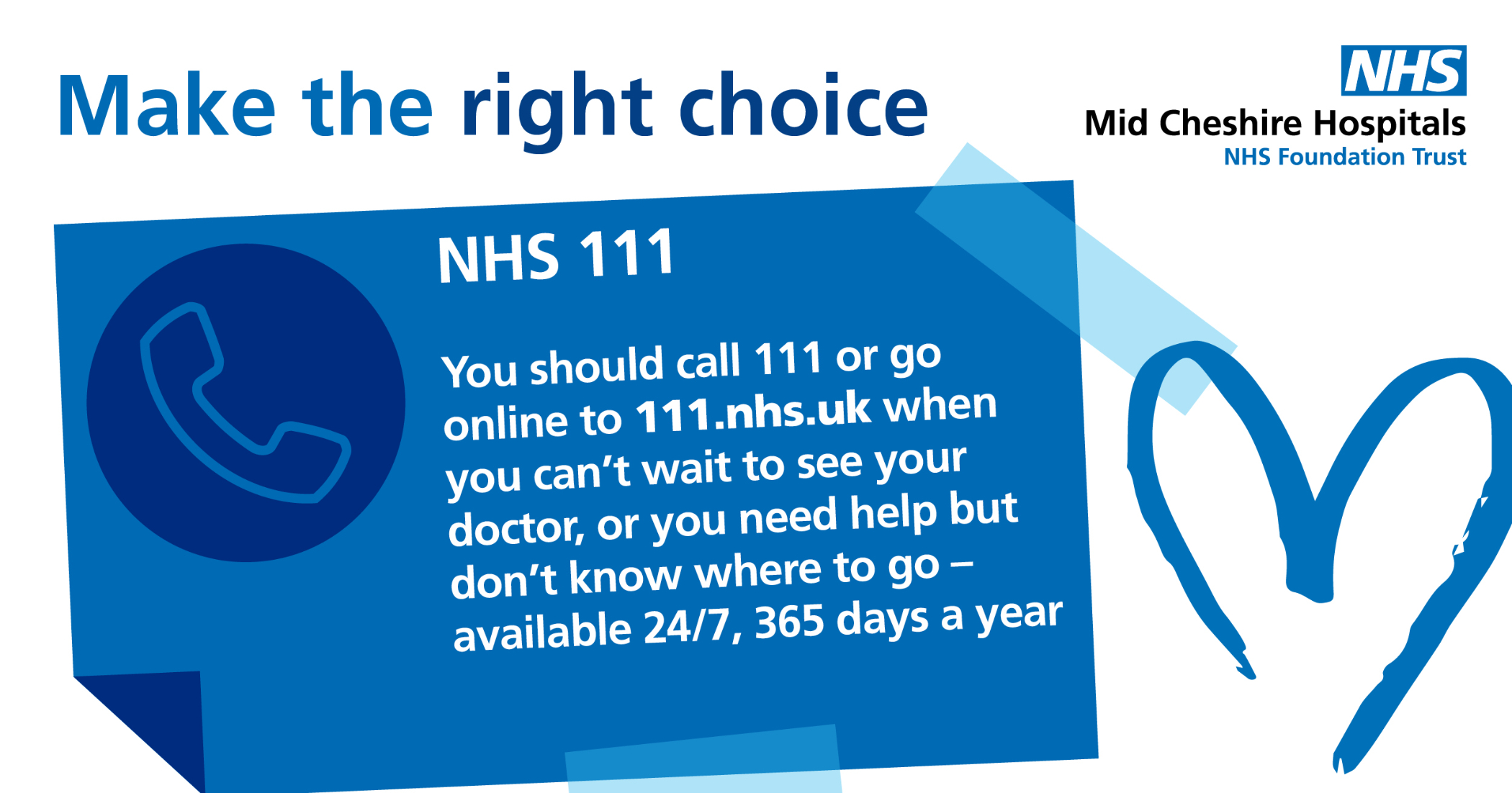
If you need urgent medical help but you're not sure where to go, use 111 to get assessed and directed to the right place for you - including your GP practice, pharmacy, or self-care at home.
Call, go online or use the NHS App. Info: https://nhs.uk/111
NHS 111 Online can tell you:
- where to get help for your symptoms, if you're not sure what to do
- how to find general health information and advice
- where to get an emergency supply of your prescribed medicine
- how to get a repeat prescription
If you’re worried about your health, don’t delay. We’re here to help you stay well this winter.
Please call 999 or go to A&E in an emergency, critical or life-threatening situation.
Infection prevention and control is a priority for our Trust. It's a vitally important part of keeping our patients and staff safe.
As the colder months approach, our IPC team are highlighting a range of simple steps for members of the public who visit someone in hospital. The advice includes:
- Visiting? Don’t bring infections with you – do not visit someone or accompany them in hospital if you have symptoms of a cough, cold, diarrhoea, vomiting, or any other infectious condition.
- Follow visiting guidelines – adhere to ward-specific rules on visitor numbers and times, and use Personal Protective Equipment (PPE) if advised by staff.
- Help keep hospitals clean – please report any litter or spillages to staff, and respect cleaning times in wards and other areas.
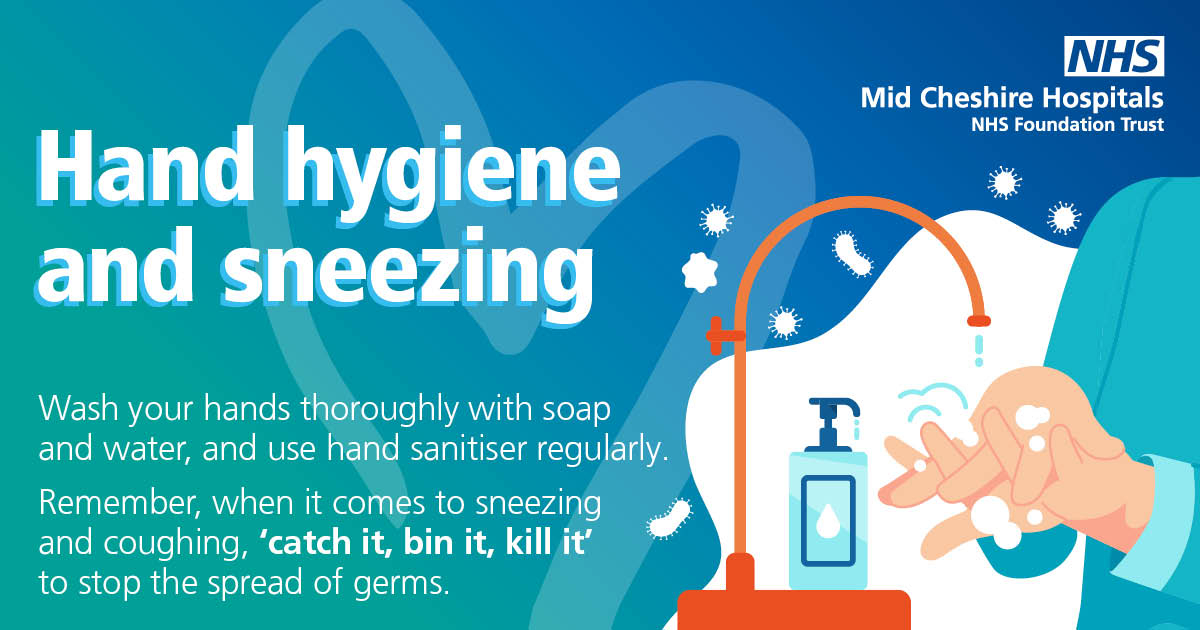
- Wash your hands - regularly with soap and warm water for at least 20 seconds, especially before and after visiting someone in hospital.
- Catch it, bin it, kill it – use tissues to catch coughs and sneezes, dispose of them quickly, and wash your hands immediately.
For more information about how you can help, visit Preventing Infection :: Mid Cheshire Hospitals NHS Foundation Trust
Flu vaccination is safe and effective. It's offered every year through the NHS to help protect children and people at risk of getting seriously ill from flu.
The best time to have your flu vaccine is in the autumn or early winter before flu starts spreading. But you can get your vaccine later.
Flu vaccination is important because:
- while flu is unpleasant for most people, it can be dangerous and even life threatening for some people, particularly those with certain health conditions
- more people are likely to get flu this winter as fewer people will have built up natural immunity to it during the COVID-19 pandemic
- if you get flu and COVID-19 at the same time, research shows you're more likely to be seriously ill
Find out more about who can have a flu vaccination, where you can get one and how to book an appointment here.
The COVID-19 vaccine helps protect against COVID-19, which can be a serious or life-threatening illness for some people. It's usually offered on the NHS in spring and early winter to people who need extra protection from COVID-19, including older people and those with a weakened immune system.
For more information, click here.
Mental health crisis
If you or a loved one are experiencing a mental health crisis, you can call NHS 111 and press Option 2 for 24-hour mental health advice and support. Information and contact details are available at nhs.uk/urgentmentalhealth
Mental health tips and support
You can find information and tips on keeping mentally healthy at nhs.uk/every-mind-matters
Speak to your GP practice about NHS Talking Therapies if you are anxious, depressed or struggling to cope. They can help you – physically and mentally – and can refer you to the right service. You can also self-refer by visiting: nhs.uk/talk
If you live with serious mental illness, you are entitled to a free NHS annual health check – talk to your GP, key worker or mental health service to book it.
Local information
Information from Cheshire and Wirral Partnership NHS Foundation Trust, which provides mental health services locally, is available at Getting help :: Cheshire and Wirral Partnership NHS Foundation Trust
Pharmacy First gives patients quick, easy access to support for common conditions through their high street pharmacy.
It includes the supply of appropriate medicines for seven common conditions, aiming to address health issues before they get worse. The conditions are:
- sinusitis
- sore throat
- earache for ages over 1yr – 17yrs
- infected insect bite
- impetigo
- shingles
If someone goes to a pharmacy with one of the seven conditions, the pharmacist will offer advice, treatment or refer them to a GP or other healthcare professional if needed.
People aged 40 and over can also get their blood pressure checked for free at local pharmacies. This can lower their risk of a fatal heart attack, stroke, kidney disease or vascular dementia.
For more information about how pharmacies can help, click here.
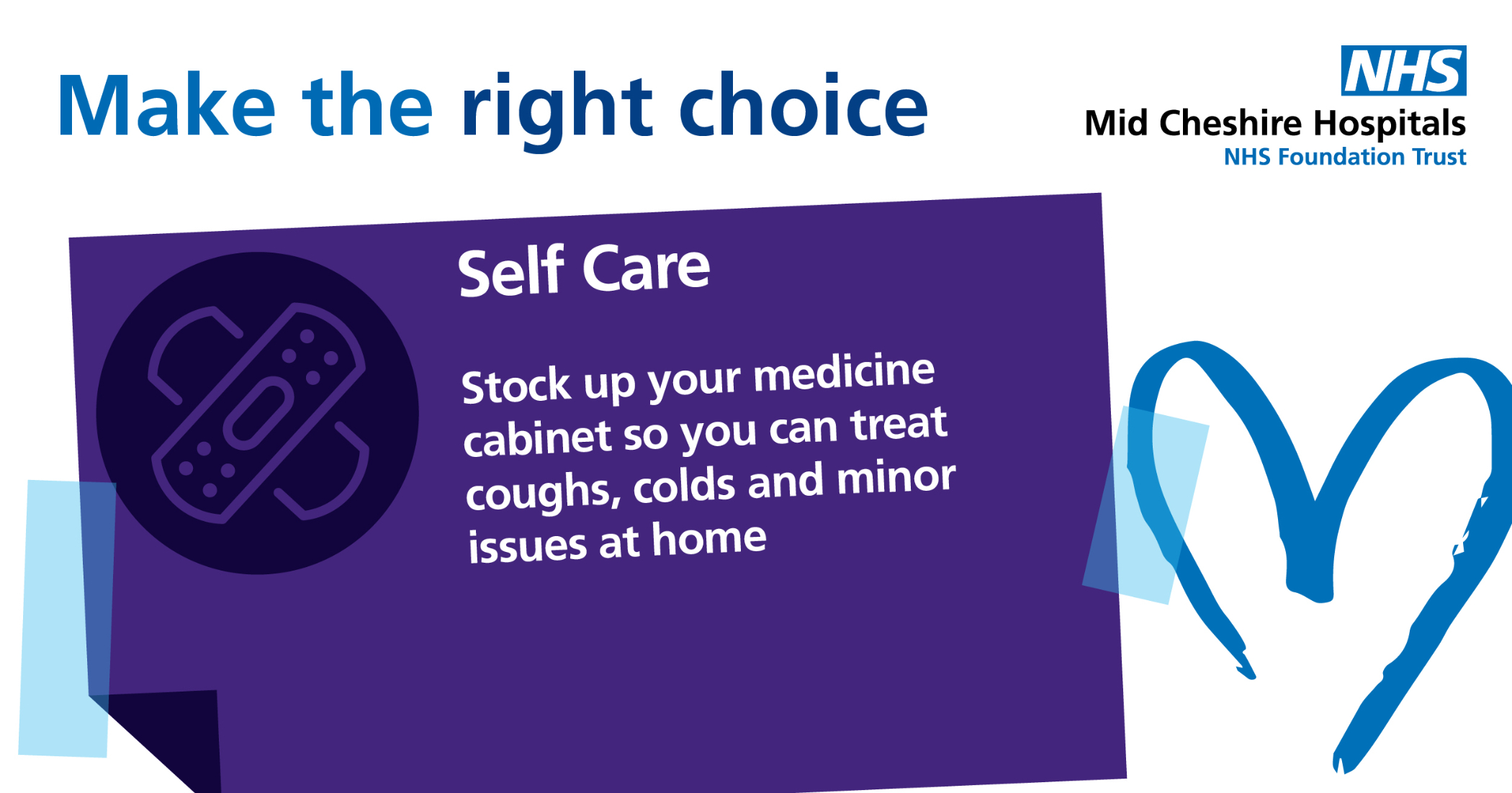
Around 80% of all care in the UK is self care. Staying active, keeping check of regular medication and knowing how to treat common illnesses yourself can help to prevent health and wellbeing issues getting to the point of needing medical assistance, which hugely helps the NHS when it is under pressure during the winter months.
The majority of people feel comfortable managing everyday minor ailments like coughs and colds themselves, particularly when they feel confident in recognising the symptoms and have successfully used over-the-counter medicine before.
Knowing what to do and where to go for help is an important part of practising self care for life. It isn’t just the GP practice that can help, pharmacies are also health experts, and they are on every high street. Pharmacists can help with all sorts of ailments, and they will also signpost you to the right place for additional health advice or treatment if you need it. Find your local pharmacy here: Pharmacies - NHS
When a child is unwell it can be worrying, and you may need advice on what to do if you can’t get to a pharmacy. The Alder Hey Children’s Hospital Symptom Checker can provide information when you need it - Symptom checker - Alder Hey Children's Hospital Trust
People with long-term health conditions are at greater risk of becoming unwell at this time of year as the colder weather makes conditions worse. One way to take good care of yourself is to ensure you don’t run out of your regular medication. You can order repeat prescriptions through the NHS App, online service or your GP practice.
More information about how to treat many common conditions at home can be found on the national NHS website: www.nhs.uk/conditions
The NHS App is a simple and secure way to access a range of NHS services on your smartphone or tablet. More information is available at nhs.uk/nhsapp
Millions of people are now using the app to manage their health the easy way, from ordering a repeat prescription to checking their records.
If you are over the age of 16 you can see your consultation notes, letters and test results. Accessing your GP health record on the NHS App can help you better understand and manage your condition, without having to phone your GP surgery.
The app also allows you to nominate your preferred pharmacy.
You can download it on your smartphone or tablet via the Google play or Apple App store.
Start using the app today. Find out more at nhs.uk/nhsapp
Is your medicine cabinet well stocked for the winter months? Over-the-counter medicines (including paracetamol and ibuprofen) can help you tackle many minor illnesses at home. You can ask your pharmacist what should be in your cabinet. For more information, click here.
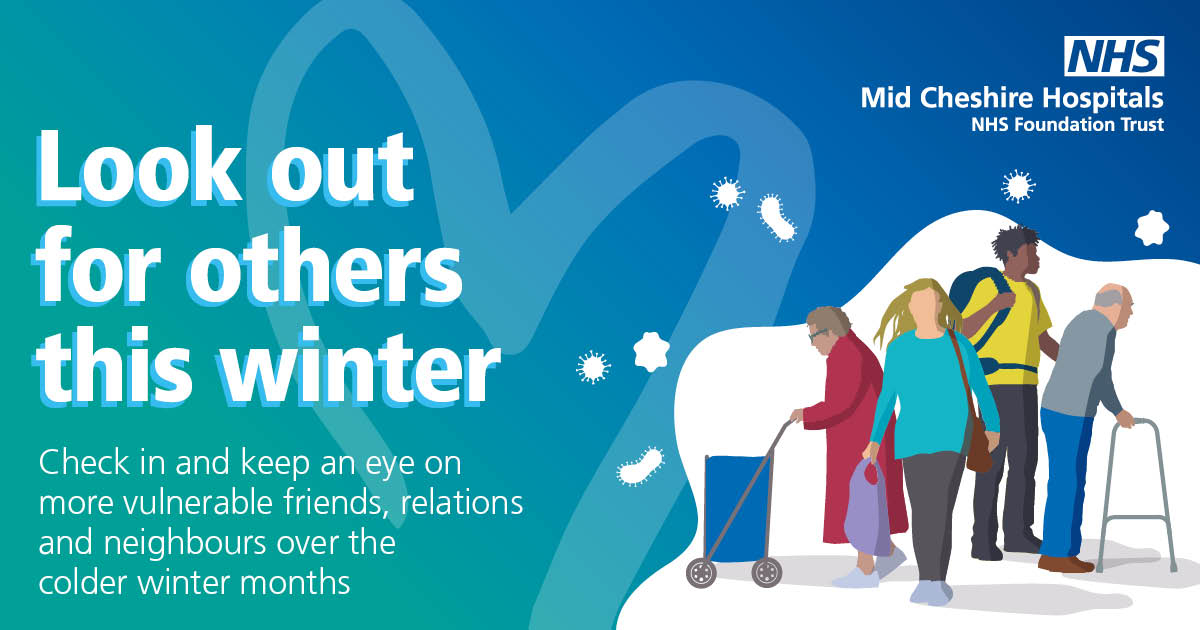
In the colder weather, it's important to remember other people - such as older neighbours, friends and family members - may need extra help in the winter months. For advice on how you can help, visit https://
In this NHS Cheshire and Merseyside video, A&E worker Sam explains the importance of choosing the right service and keeping our hospitals flowing...