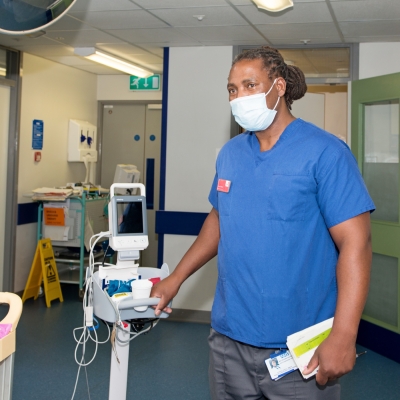
The Equality Delivery System (EDS) is an improvement tool for patients, staff and leaders of the NHS. It supports NHS organisations in England - in active conversations with patients, public, staff, staff networks, community groups and trade unions - to review and develop their approach in addressing health inequalities through three domains: Services, Workforce and Leadership. It is driven by data, evidence, engagement and insight.
The Trust has evaluated its performance and commitment to equality and inclusion by focusing on three key domains with a subset of outcomes under each. The Three domains are listed below and have been subjected to a rigorous evidence-based review with independent key stakeholders.
Domain One - Service Line Reviews
For 2024-25 Podiatry, Maternity, and Phlebotomy services undertook the review and shared their summary findings with representatives from Cheshire & Merseyside Integrated Care Board
Domain Two - Health and Wellbeing of the Trusts Workforce
A review of the evidence took place with the Trusts Equality Diversity & Inclusion Steering Group which includes representatives from the Patient experience team,. Trade Union Representatives, Freedom to Speak Up Guardians and Chairs of the Trusts staff networks.
Domain Three - Inclusive Leadership
The commitment of the Trusts senior executives and leadership team was evaluated in the context of work undertaken to address health inequalities, also the extent to which leaders actively engage on activities linked to equity and inclusion and reviewed with representatives of the Cheshire & Merseyside Integrated Care Board. The Trusts commitment to journeying to become an anti-racist organisation featured prominently in this years submission.
Overall, the Trust has graded as ‘Achieving’ with an overall score of 26 out of a maximum of 33 points. The Trust senior leadership team have been involved in evaluating the learning from undertaking the EDS. This grading report has passed through internal governance channels including the Trusts Equality Diversity & Inclusion steering group, Executive Workforce Assurance Group, Workforce & Digital transformation committee, and will be reviewed with the Trust Board in March 2025, the earliest opportunity to do so following completion of the evaluation process.